Art Toronto 2026
Come see us at Booth # 301
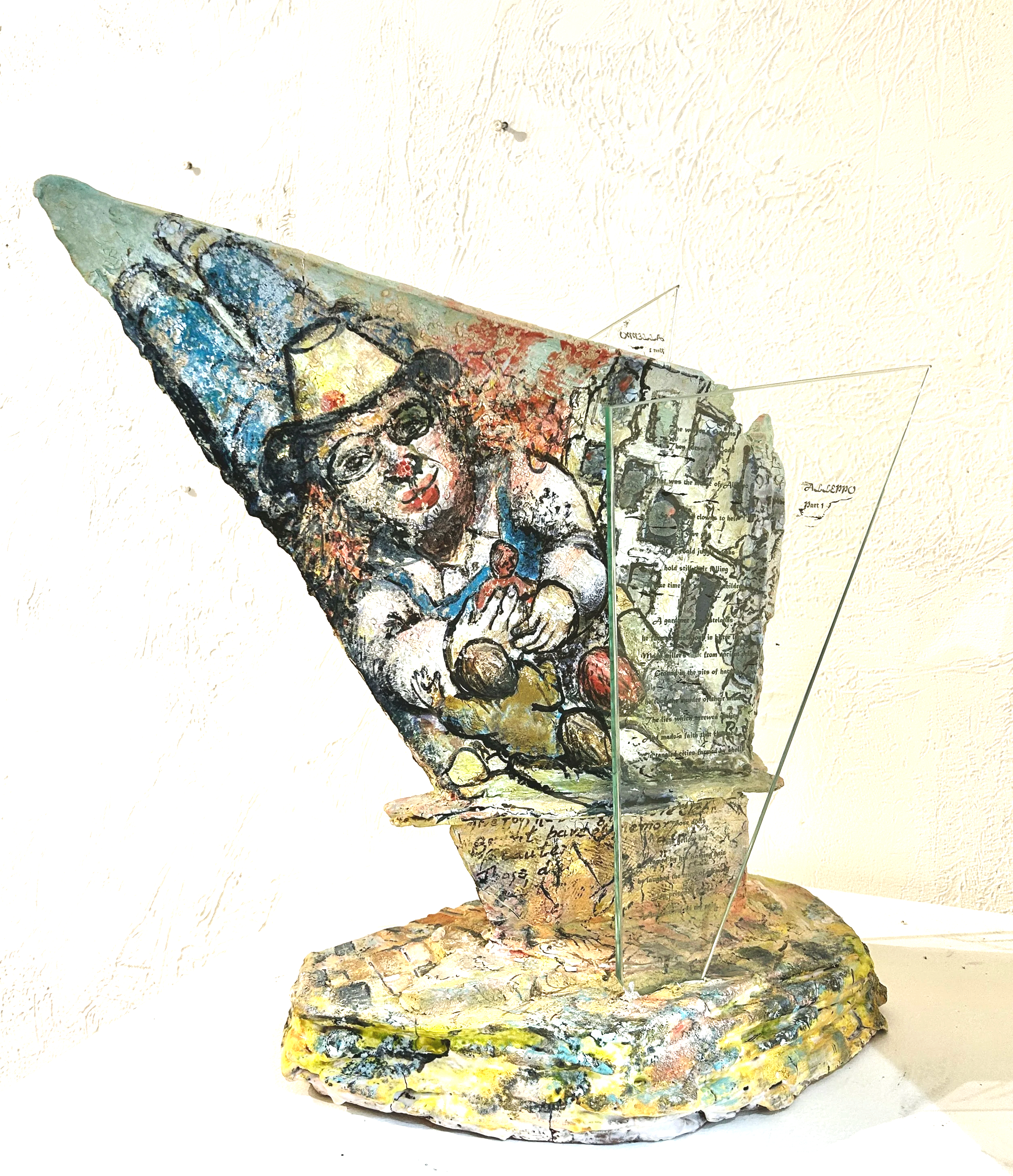
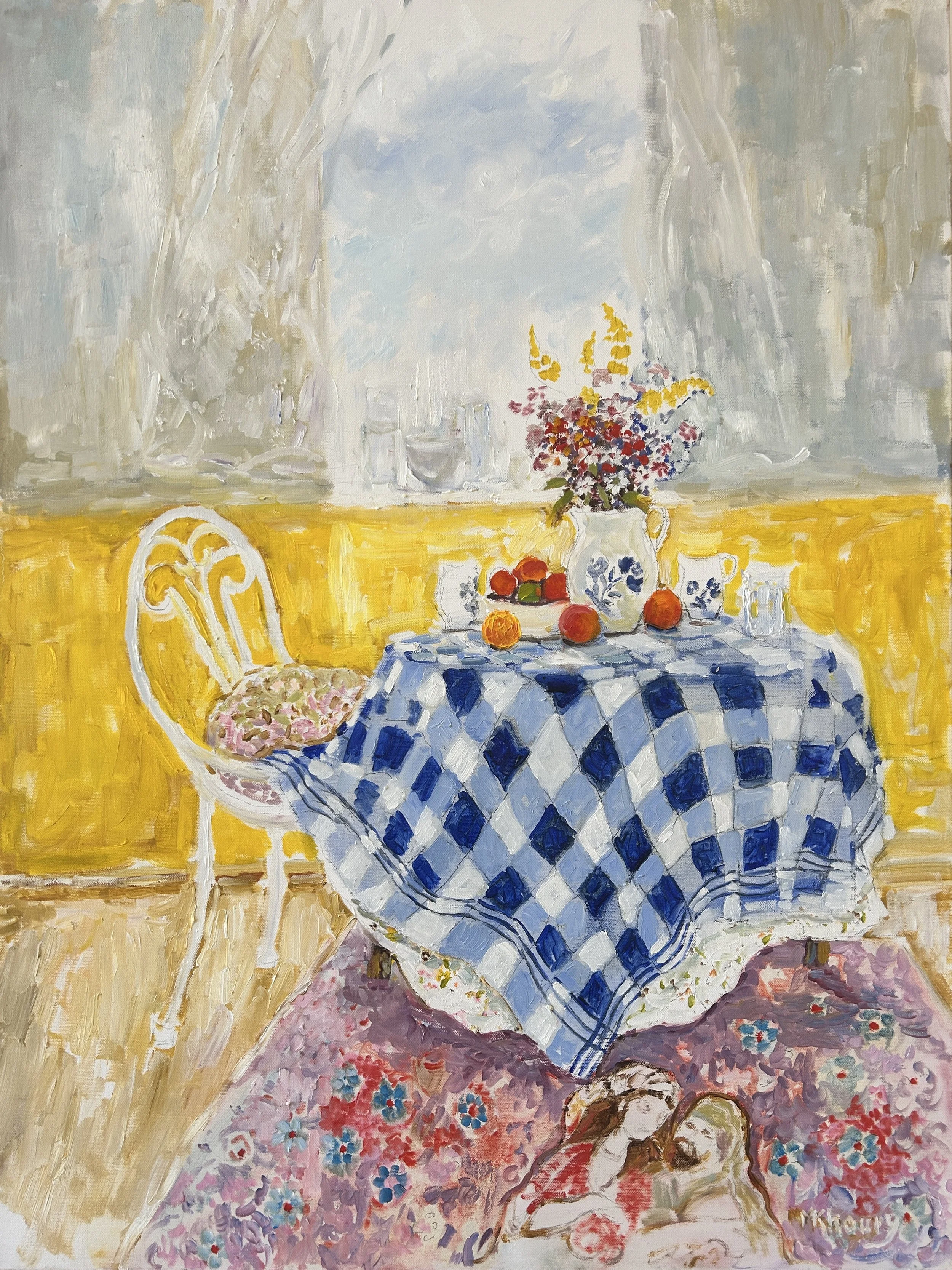
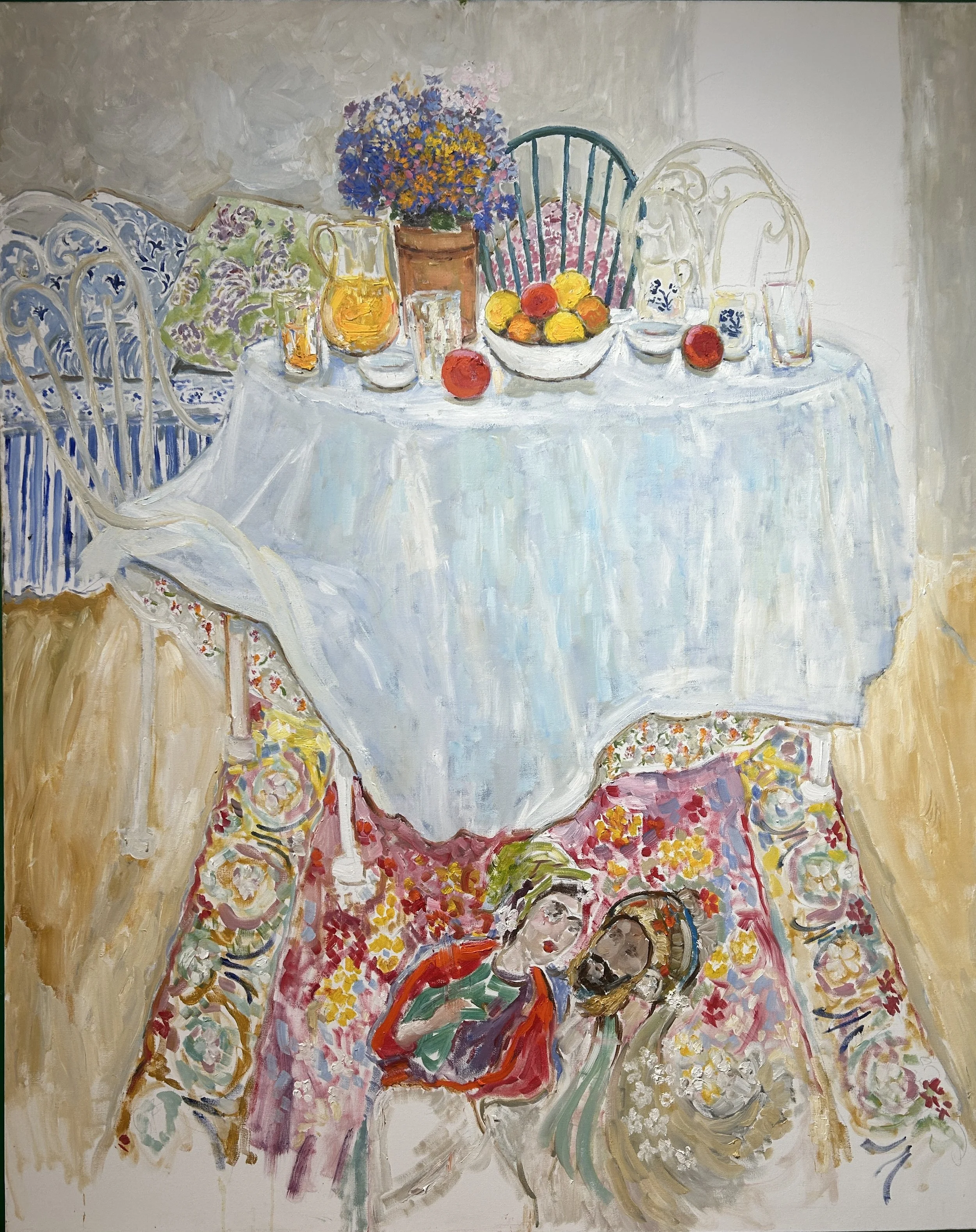
Gallery On Queen is very pleased to announce that we have been selected to participate in this year's Art Toronto Fair , from October 29th - November 1st. We are excited to feature a variety of artists and mediums that represent excellence in New Brunswick art.
@art_toronto is one of Canada's leading and prestigious annual art fairs. This year is the 27th instalment of the show which is dedicated to supporting art in Canada, connecting audiences to local, national and international galleries, and promoting diverse creative practices.
We are thankful for the support of the Department of Tourism, Heritage and Culture and the Province of New Brunswick / Nouveau-Brunswick
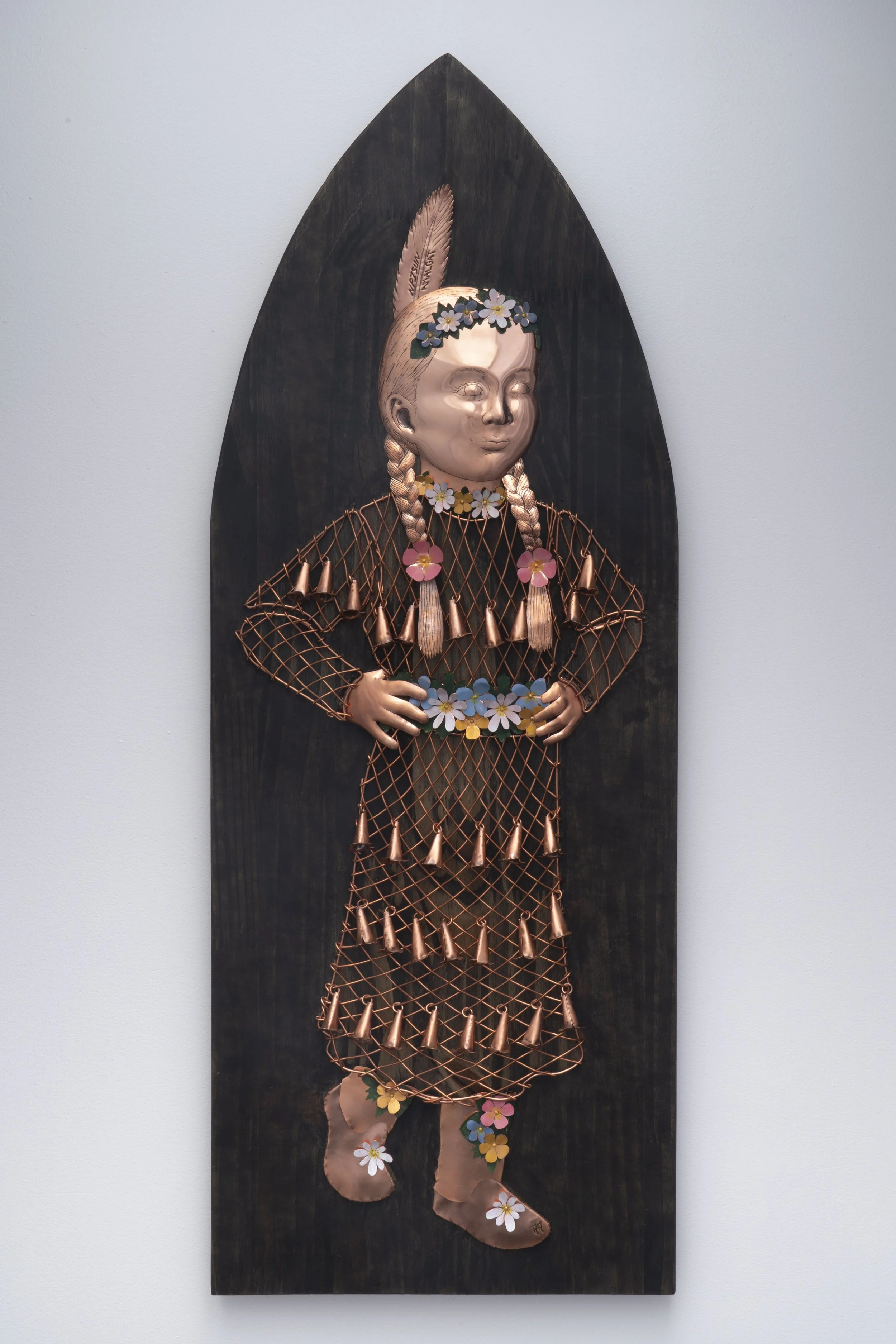
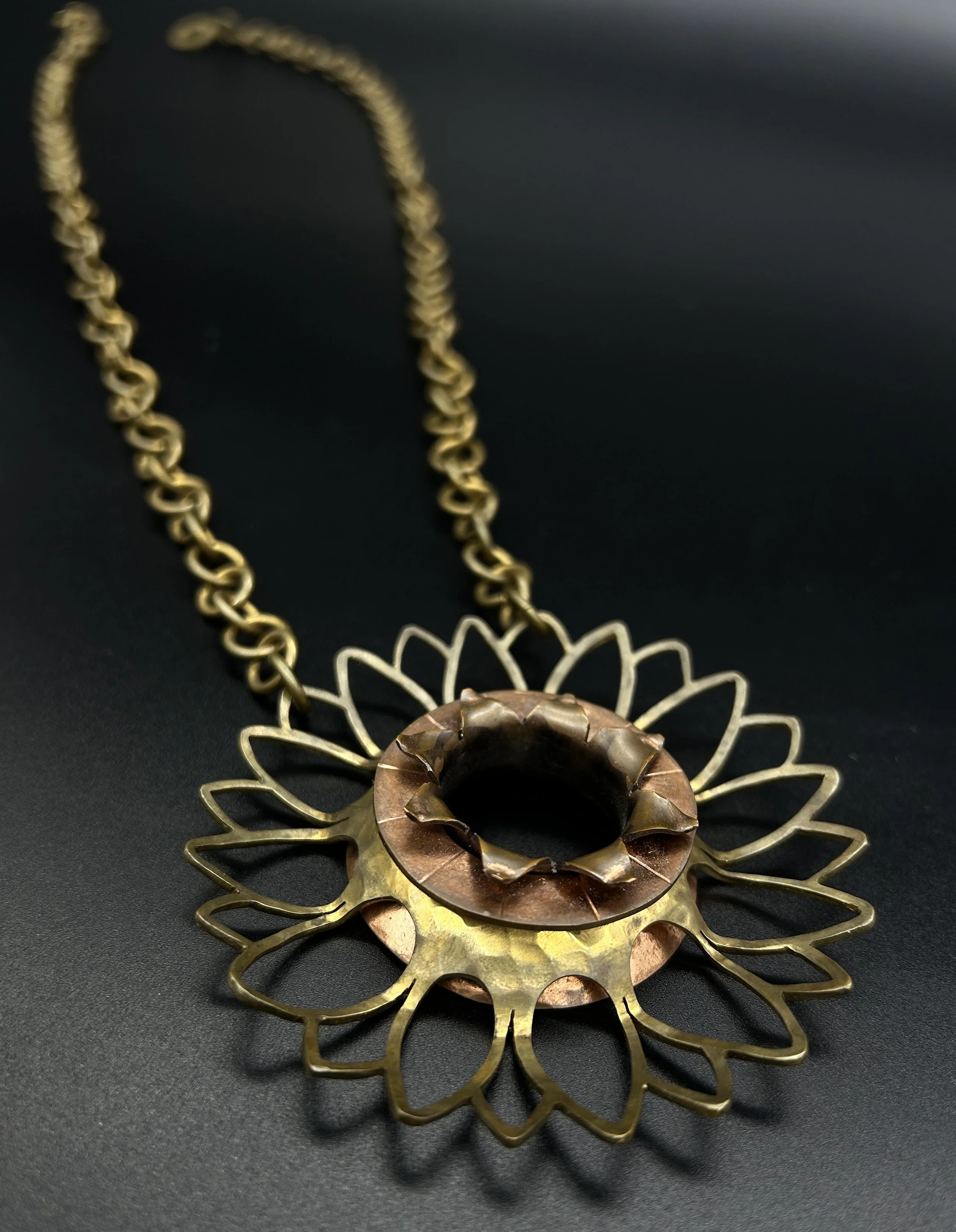
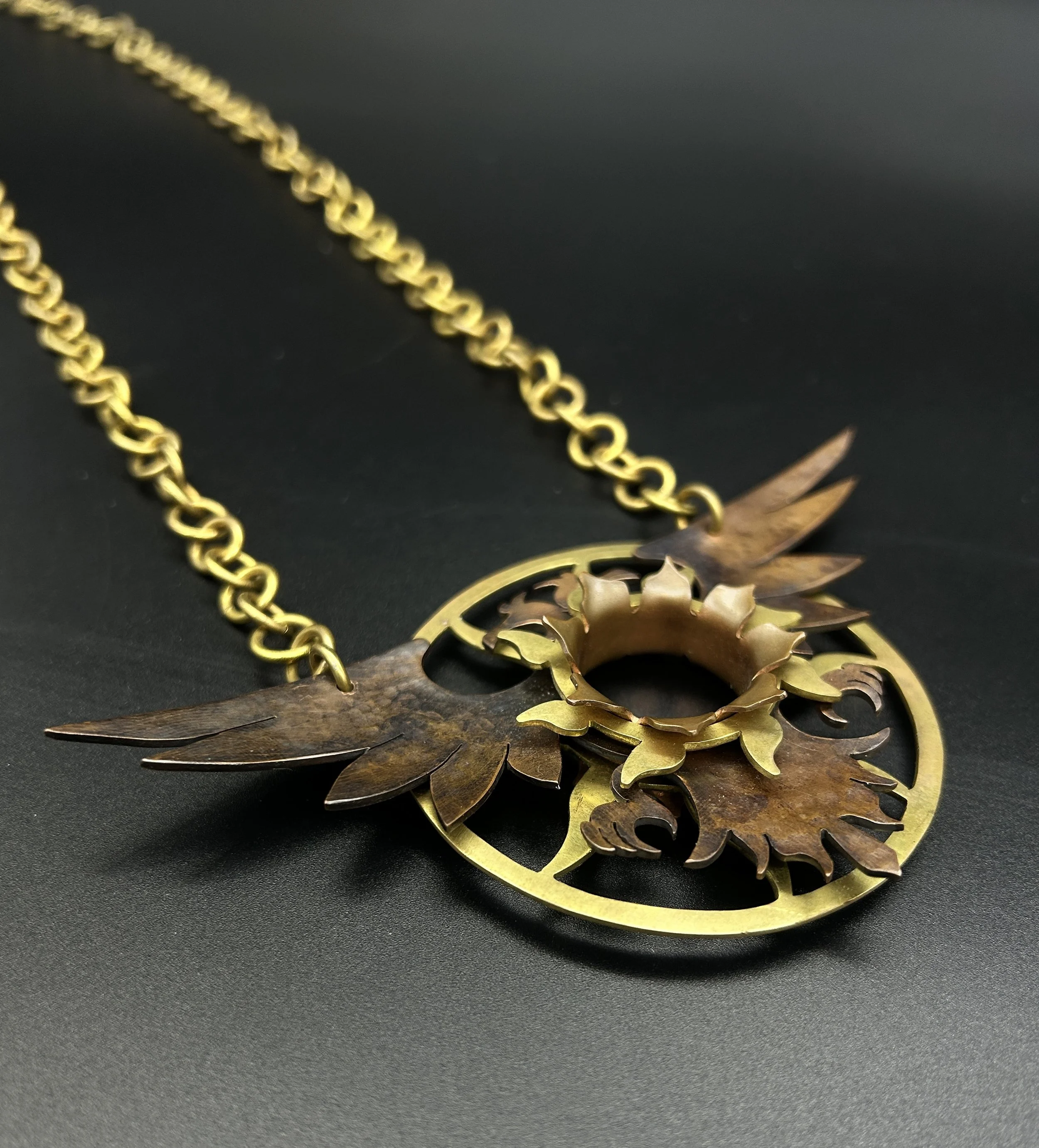
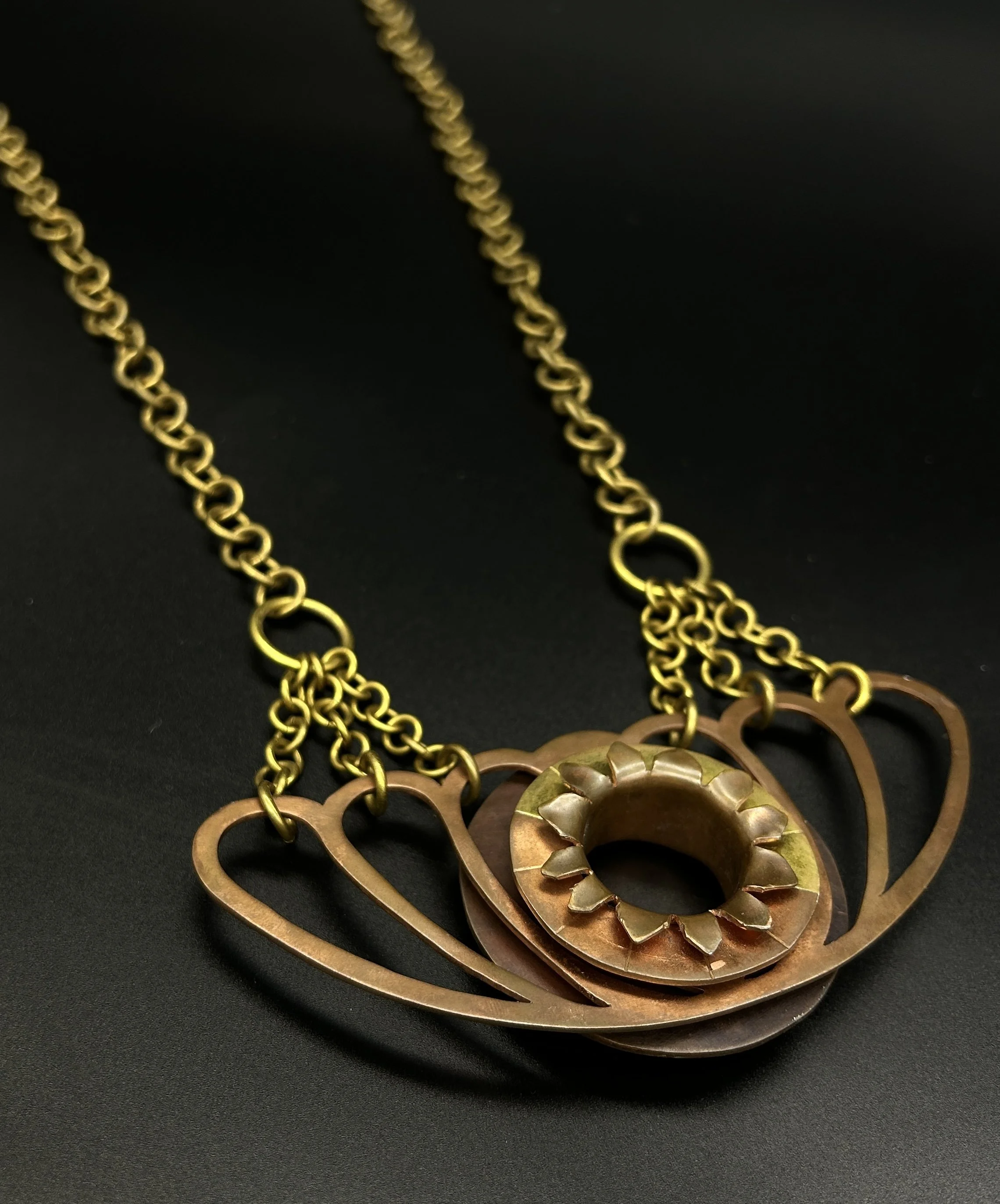
Audrey Arsenault, is a Mi’gmag silversmith and jeweller. She works mainly with precious and semi-precious materials. In her work, she is influenced by her Wabanaki cultures’ beliefs, story of resilience, and minimalist style.
Arsenault graduated in 2021 from the Advanced Studio Practice program at the New Brunswick College of Craft and Design. She is a 2023 graduate of the University of New Brunswick in Fredericton with a degree in Applied Arts. In 2021 and 2022, Arsenault’s work was shown in the Yorkville Village of Toronto, ON, in Gallery on Queen’s Wabanaki show. In 2022 her work was part of Gallery on Tour/Tata, a collaboration between Gallery on Queen in Fredericton, NB, and the Ice House Gallery in Tatamagouche, NS. She was also part of the Beneath the Surface artist residency in Fundy National Park in 2022, with a following exhibition outdoors on the park grounds in June 2023. Arsenault’s works, “Ethnocide” (2021) and “Na’gu’set” (2022) have been selected for the 2023 acquisition to the Provincial art collection, CollectionArtNB. Her work has been purchased for public and private collections.
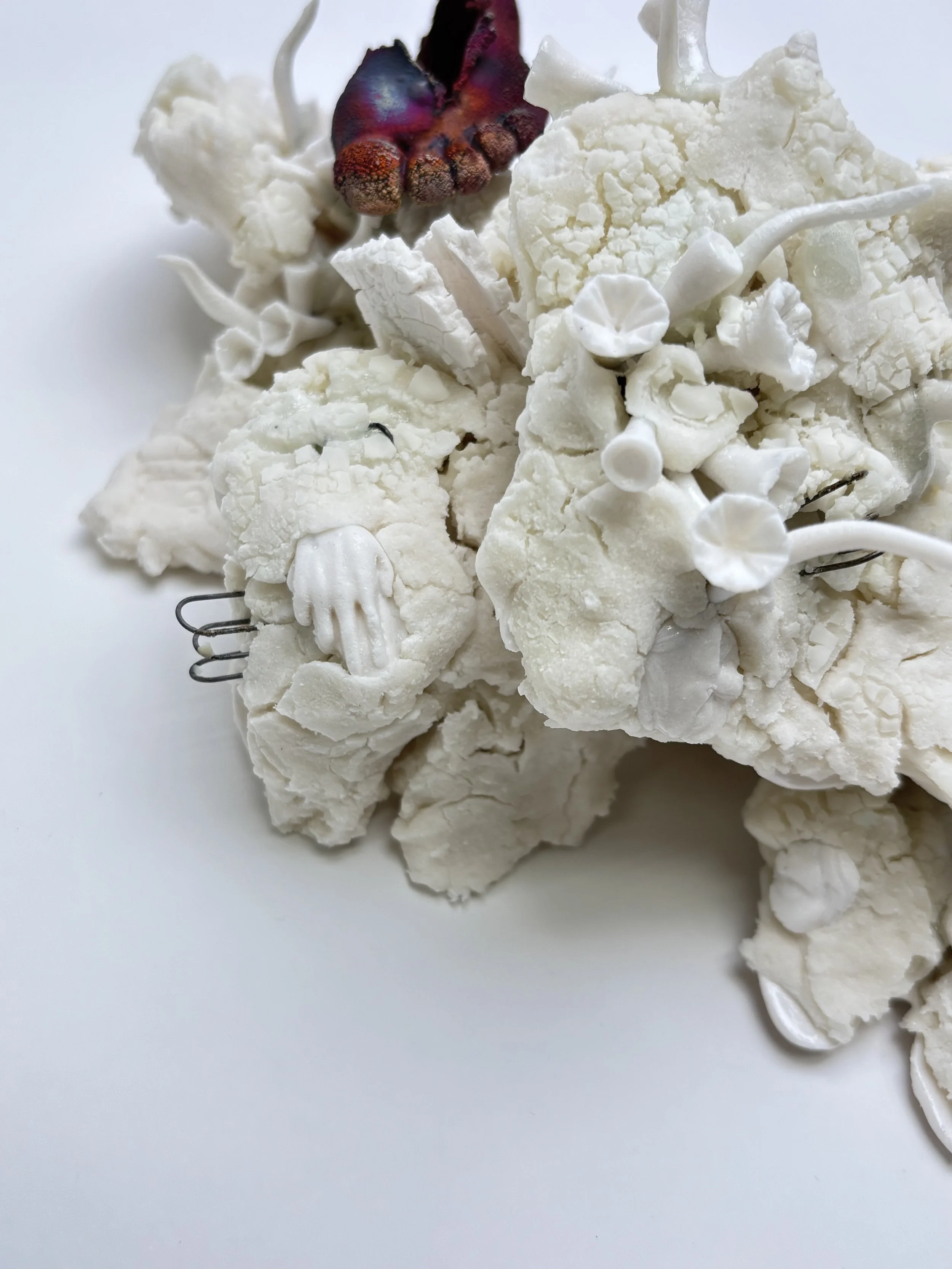
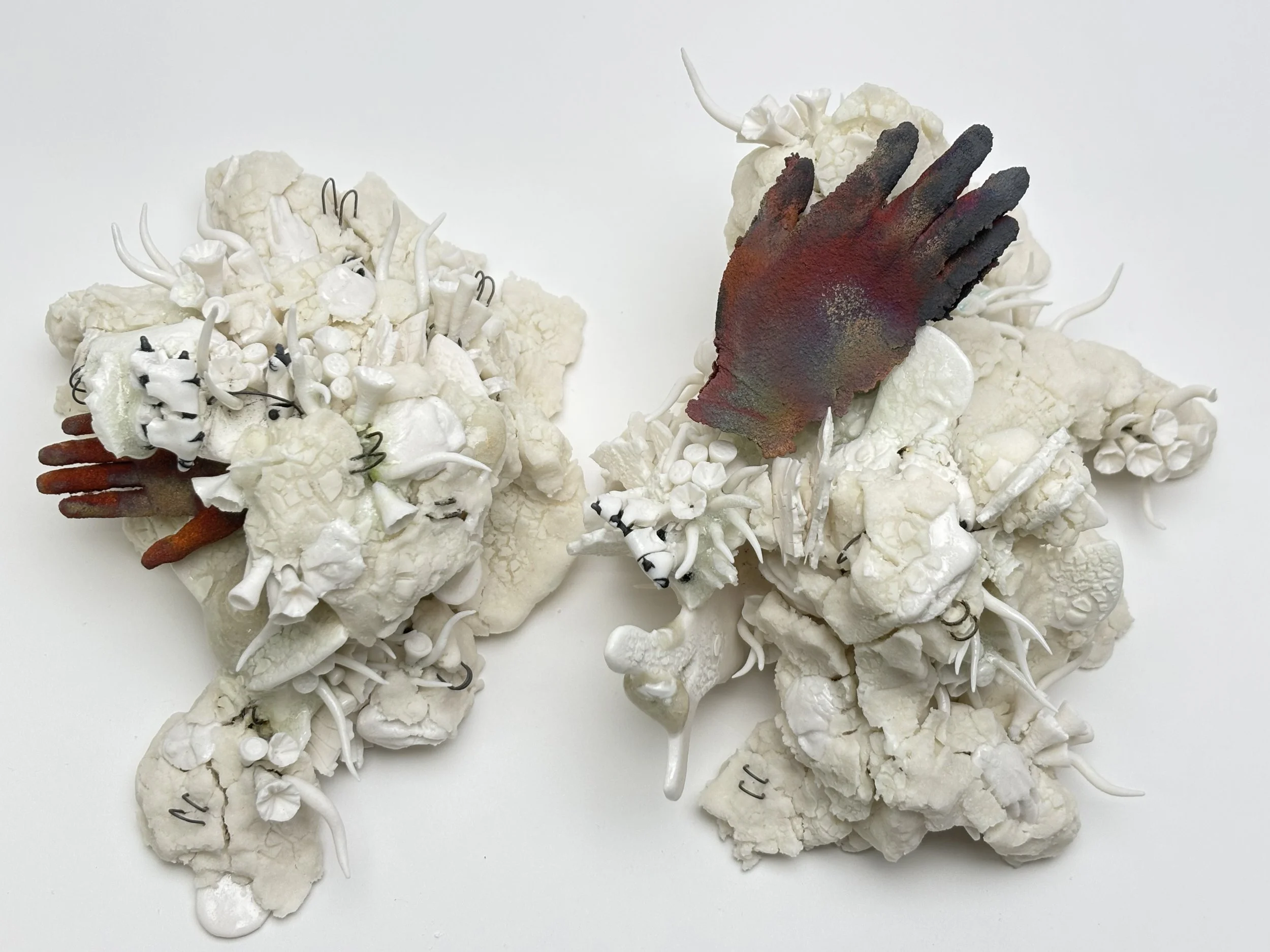
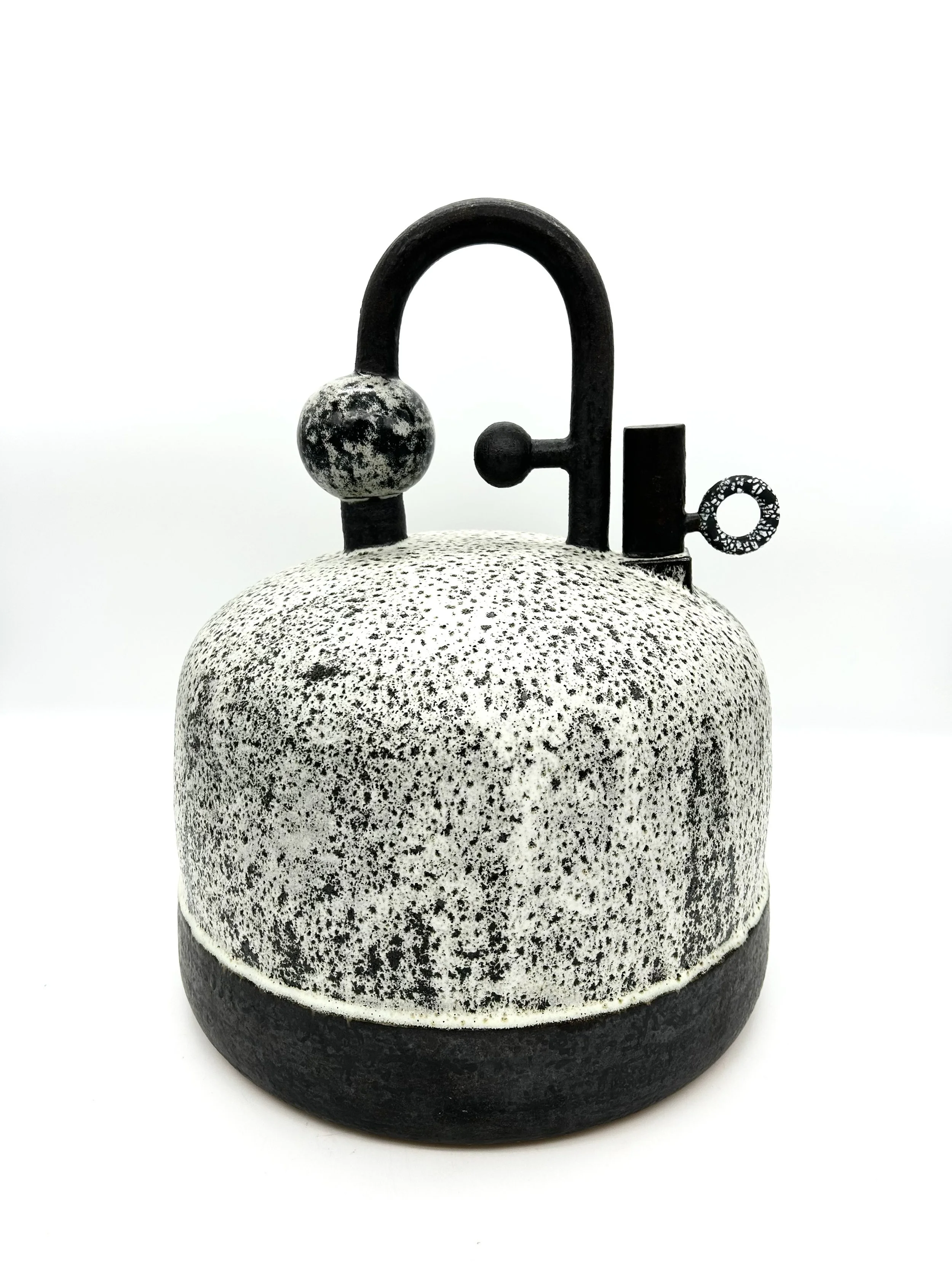
Yalda Bozorg - “ Trace “ Ceramic, Mixed Material Sculpture
Yalda Bozorg is an Iranian-Canadian artist working with ceramics, metal, and installation. Her practice is rooted in close observation of material behaviour and in what happens when materials are pushed and allowed to respond in unexpected ways.
Working primarily with porcelain and copper, Yalda is interested in the traces that remain through making. Pressure, heat, movement, and touch become part of the work, sometimes visible on the surface and sometimes revealed only through time or firing. Rather than beginning with a predetermined form, she works in response to the material, allowing resistance and change to influence what emerges.
Born in Iran during the war and later immigrating to Canada, Yalda carries an enduring awareness of how change can alter our relationship to places, objects, and ourselves. This sensitivity quietly enters her studio practice and her attention to what materials hold, reveal, and retain.
She holds a PhD in Art and Design from Cardiff Metropolitan University. Her work includes sculpture, installation, and pieces that invite touch, allowing the material to continue changing through its encounters with others.
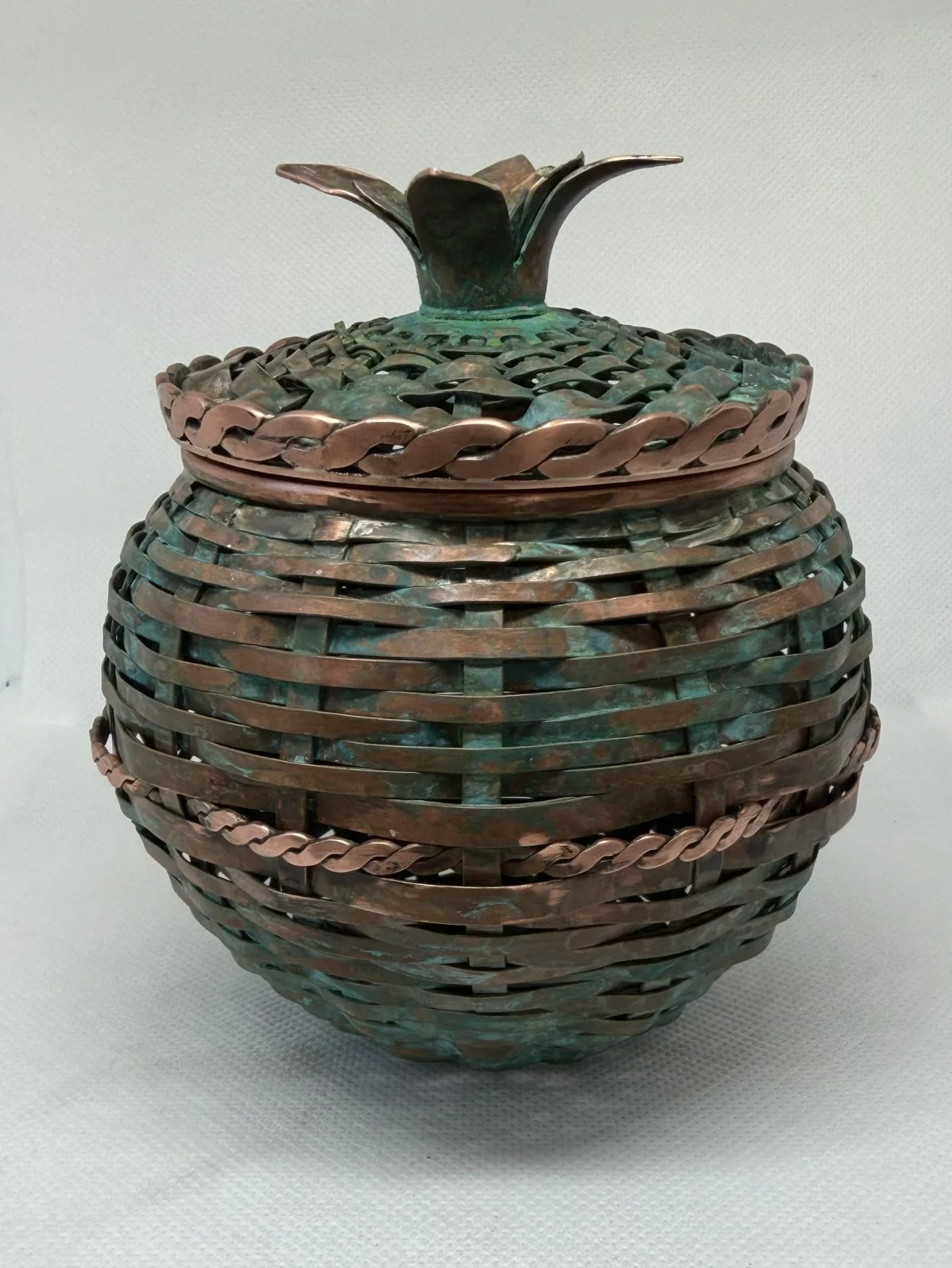
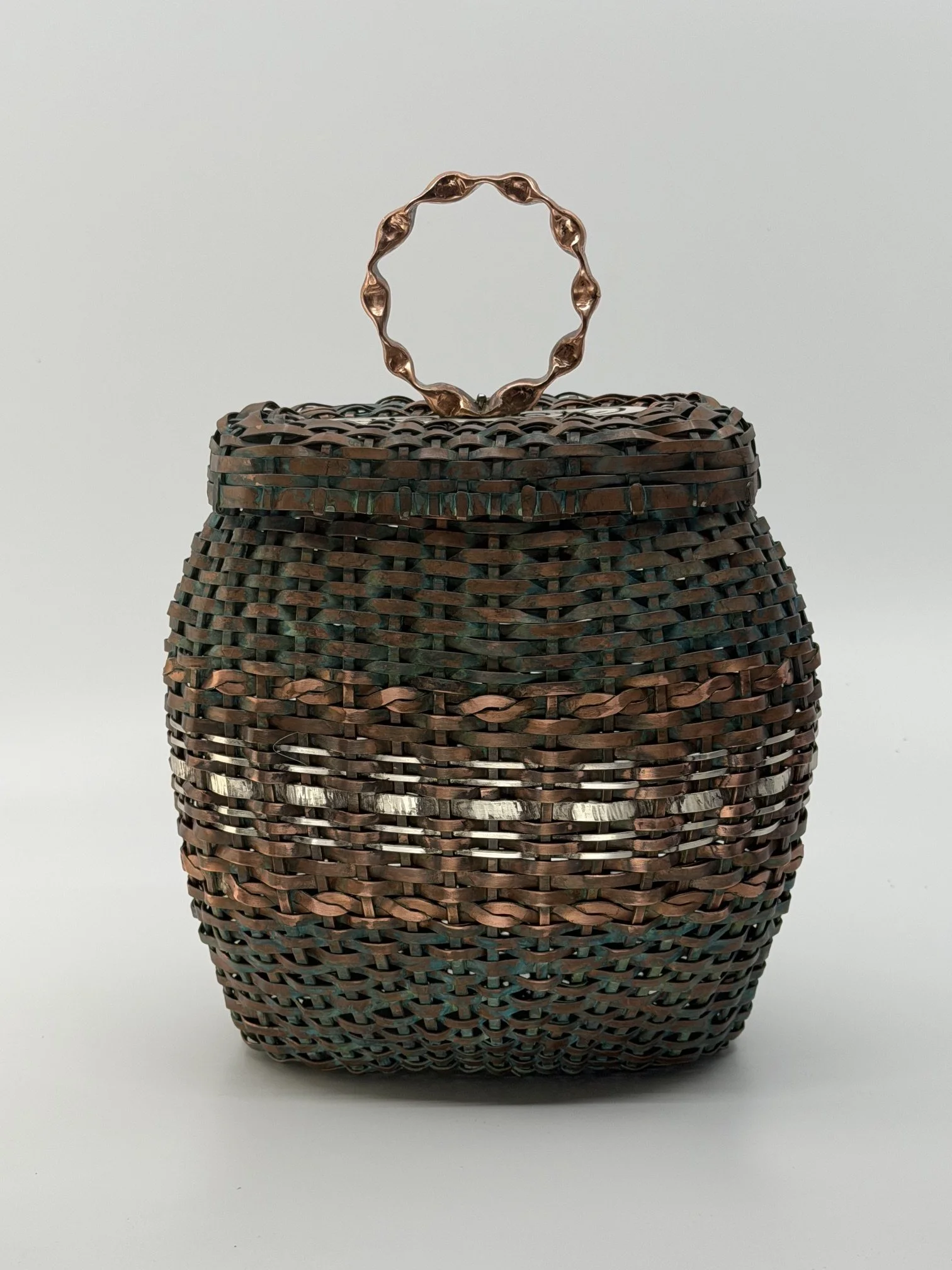
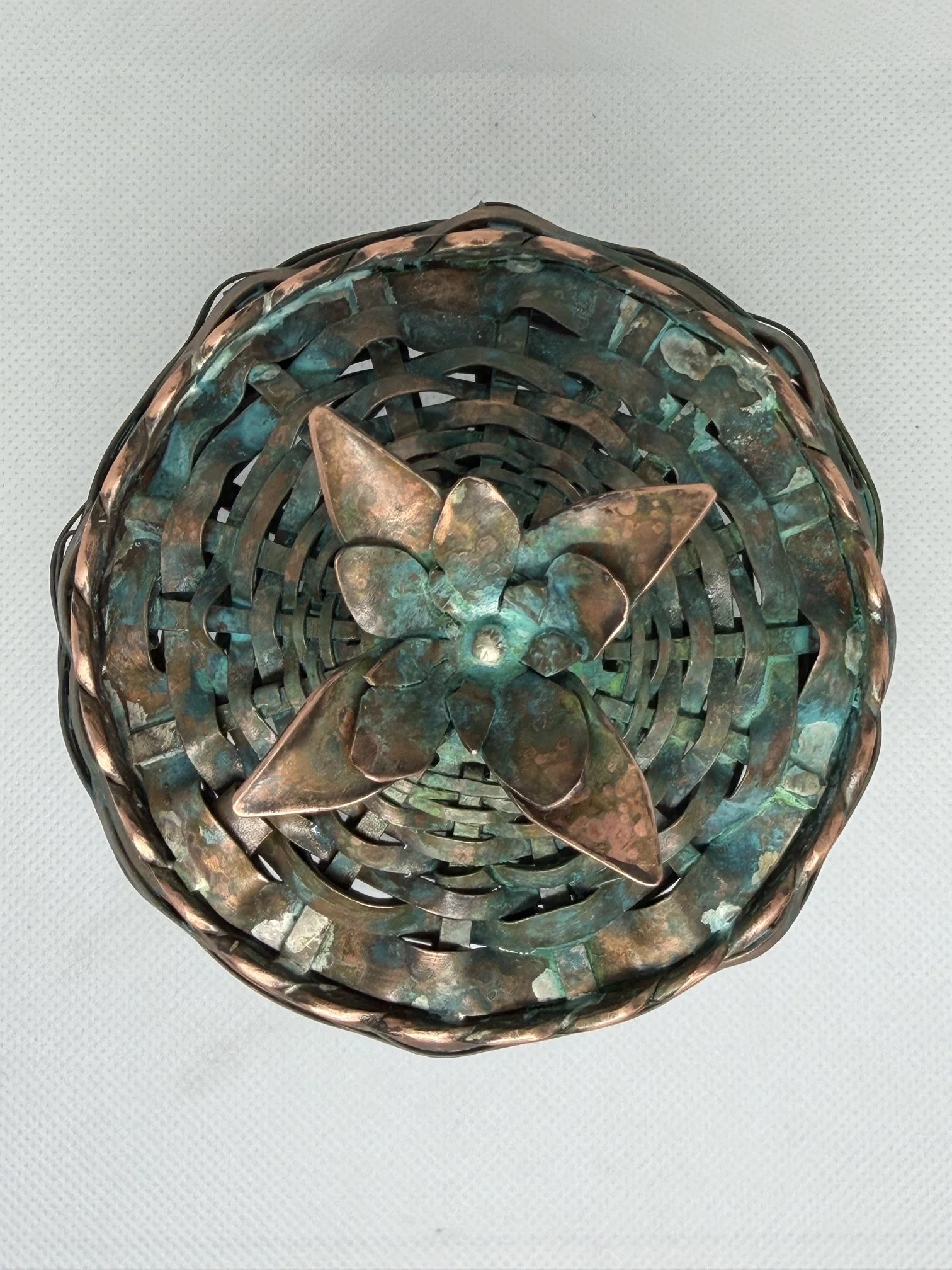
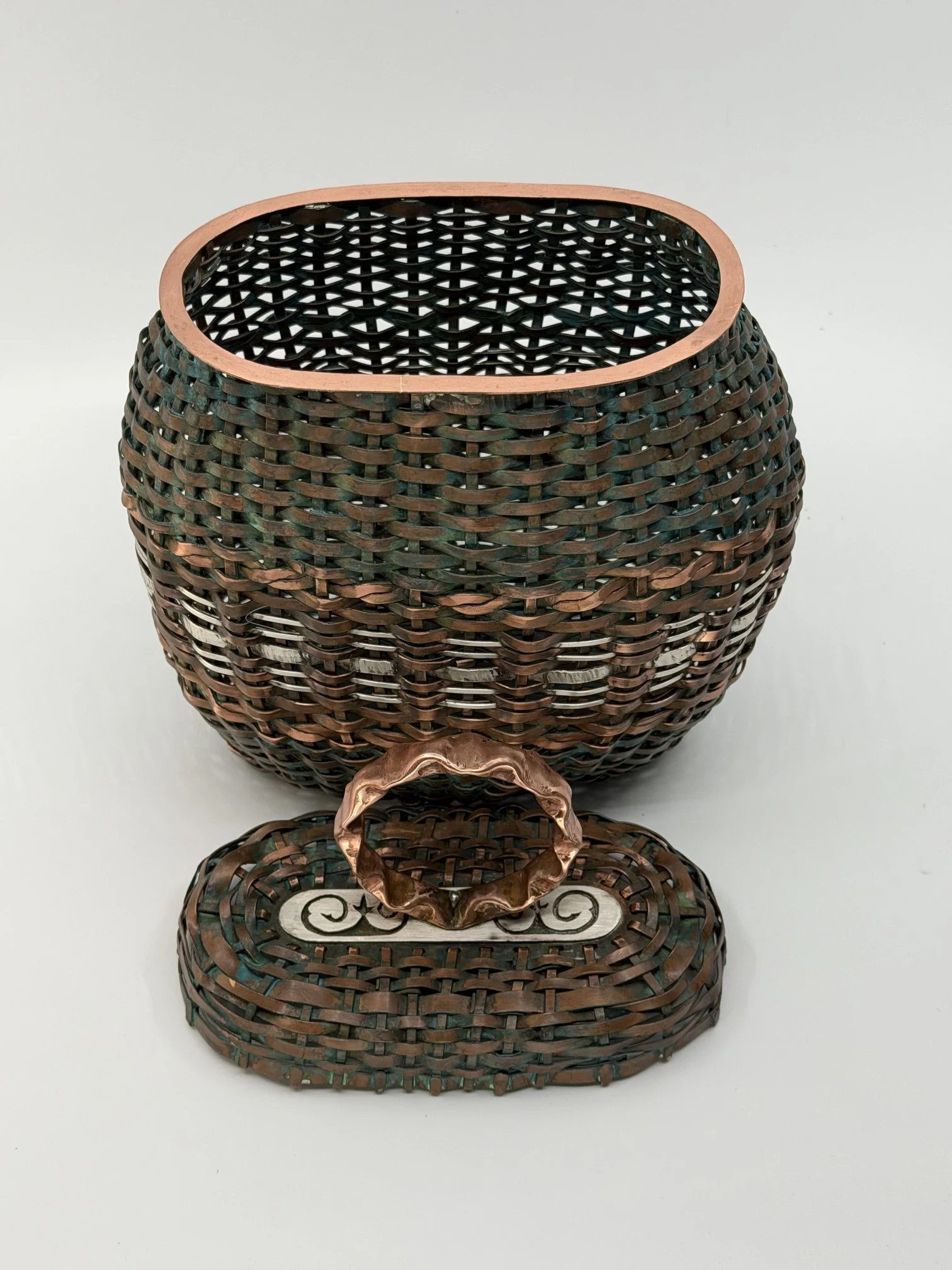
Shane Perley-Dutcher is a Wolastoq (Maliseet) mixed media artist from the Neqotkuk Wolasqiyik (Tobique First Nation) in New Brunswick. His exposure to art began when he was seven years old. He then trained at the New Brunswick College of Craft and Design, earning a Diploma in Natives Art Studies and Jewellery Manufacturing graduating with honours and distinctions. Shane draws his design inspiration from Wolastoqiyik Traditional knowledge and contemporary aesthetics. Shane learned to weave from renowned basket maker Veronica Atwin in Bilijk (Kingsclear First Nation). His artistic mentor includes many exceptional individuals such as Shirley Bear, Peter Clair, Veronica Atwin, Gwen Bear, Charles Solomon, Ned Bear, and Brigitte Clavette.
Aduksis Jewellery Designs was created in 2006 and continues to grow to this day. Shane Perley-Dutcher continues to challenge himself as a mixed media artist and jewellery designer, with custom pieces found in private and public collections across Canada and internationally.
AJD designs use natural materials such as birch, cedar, spruce, ash, copper, silver, gold and platinum to create unique lines of jewellery and one of a kind sculptural pieces. Shane gathers his traditional materials for his art because it maintains his connection to the land. Building on this relationship will always be part of his creative journey.
Dutcher implies the term “reweaving” as a process of unlearning and then relearning many facets of his own identity and history. He repairs the metaphorical gaps by listening and learning from elders to better align his sense of self as Skicinuwok (a Native person). His work speaks to modern-day “Reconciliation” by analyzing regional histories of scalping proclamations and recorded/lived experiences of the elders who survived the atrocities of Indian Day Schools and Residential Schools. He points out the expectation generally falls on Indigenous peoples to forgive past wrongdoings at the hands of the governments and churches involved, instead of focusing of the systematic changes and the need to educate the general public on these issues. His work serves as a social commentary where the viewer is expected to engage within the dichotomies of historical Indigenous and Western relations.
Shane Perley-Dutcher contributes to Wabanaki art history by fashioning bodies of work that are authentic and truthful to Wolastokuk (the territory) and their collective identity.
In 2026 Shane was selected for the shortlist National Gallery of Canada’s Sobey Award.
Founded in 2002, the Sobey Art Award is funded by the Sobey Art Foundation (SAF) and organized and presented by the National Gallery of Canada (NGC). The Award propels the careers of artists through financial support and recognition in Canada and beyond.

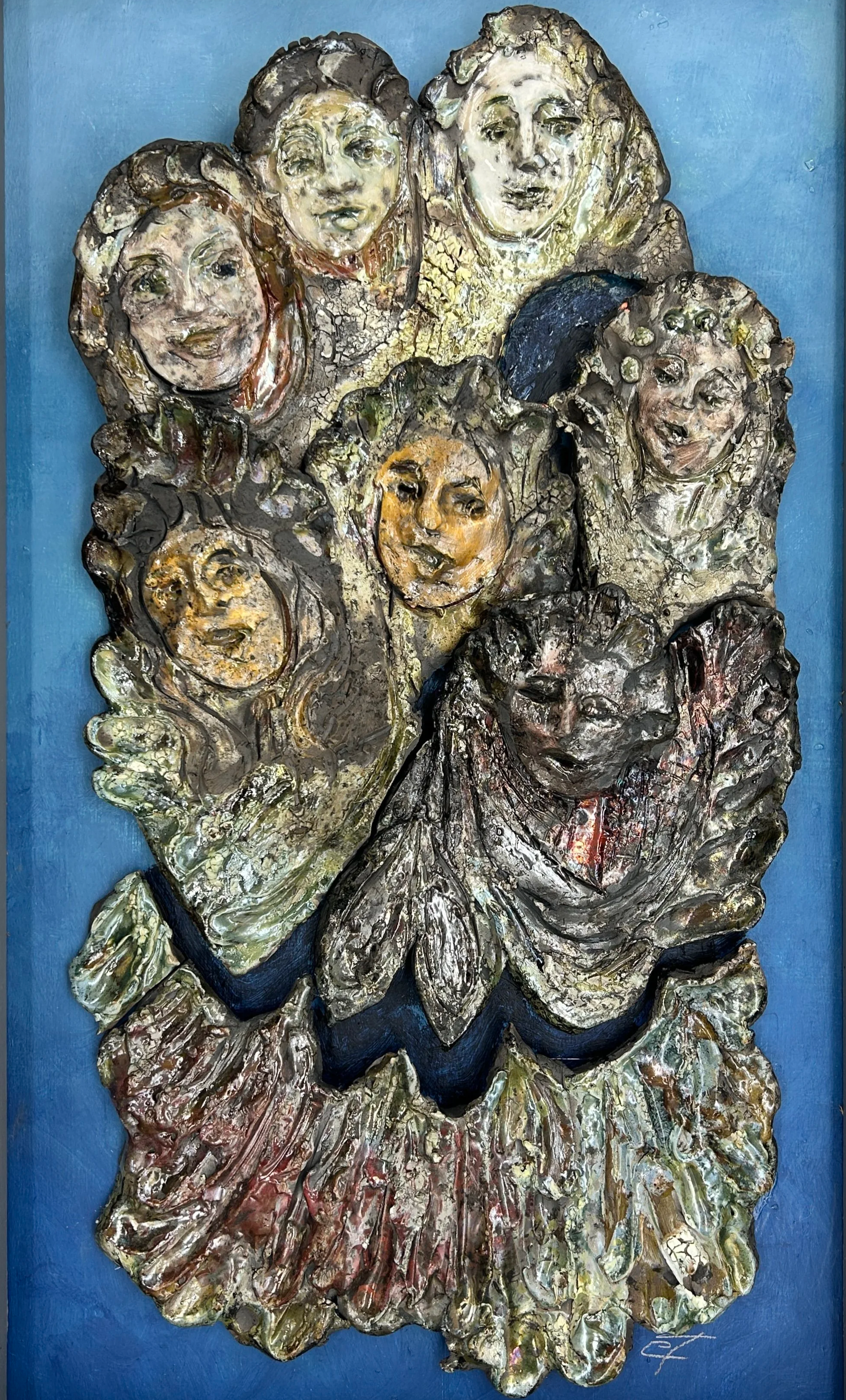
Originaire du petit village de la Rivière-de-Shédiac, Éveline Gallant Fournier habite la région d'Edmundston depuis la fin des années 70. Ses oeuvres sont conçues à travers divers médias: la peinture, la sculpture, les installations, l'art numérique et le land art. L'art public fait aussi partie de son cheminement, notons entre autres Khronos, une oeuvre monumentale installée en permanence au Jardin botanique du Nouveau-Brunswick.
Le travail d'Éveline est axé sur la recherche. Toujours en exploration et en quête de nouvelles connaissances, elle a participé a 4 résidences d'artiste: sculpture bronze, Atelier du bronze, Inverness, Québec - sculpture céramique de grande dimension, Centre des arts d'Edmundston - sculpture dans l'ancienne technique japonaise du raku, Atelier Josiane Vedrine, Bic, Québec - et en Land Art, Aux trois Plaquebières, Île Lamèque. Éveline a aussi initié un nombre d'événements artistiques et des projets avec participation communautaire.
Récipiendaire de plusieurs bourses de création, de dévelopment professionnel et pour la réalisation de projets d'art régionaux du Conseil des arts du Nouveau-Brunswick; Éveline a aussi remporté plusieurs prix en Atlantique, au Québec et en France. En 2014, elle devenait marraine du Festival des arts visuels en atlantique; et en 2016, elle remportait le prestigieux prix Éloize de l'artiste de l'année en arts visuels. Eveline compte à son actif une foule d'expositions individuelles et collectives au Canada, au États-Unis, en France, au Portugal et en Tunisie.
Born in the tiny village of Shediac River, Éveline Gallant Fournier has lived in Edmundston since the late 1970s. She works in a variety of media including painting, sculpture, installations, digital art and Land Art. Public art has also been part of her journey: examples include Khronos, a monumental work on permanent display at the New Brunswick Botanical Garden.
Éveline's art work is focused on research. Always exploring and in search of new knowledge, she participated in 4 artist residencies: bronze sculptures, Atelier du bronze, Inverness, Quebec - large-scale ceramic sculptures, Edmundston Art Center - sculptures in the ancient Japanese technique of raku, Atelier Josiane Vedrine, Bic, Quebec - and in Land Art, Aux trois Plaquebières, Île Lamèque. She has also initiated a number of artistic events and realized several community participatory arts projects.
Eveline has received several grants from the New Brunswick Arts Board for creation research, professional development and for regional community arts projects; and was also awarded prizes in Atlantic Canada, Quebec and France. She was godmother for the Atlantic Visual Arts Festival in 2014; and in 2016, she received the prestigious Prix Éloize as visual artist of the year. Éveline has a long list of individual and group exhibitions to her credit in Canada, the United-States, in France, Portugal and Tunisia.
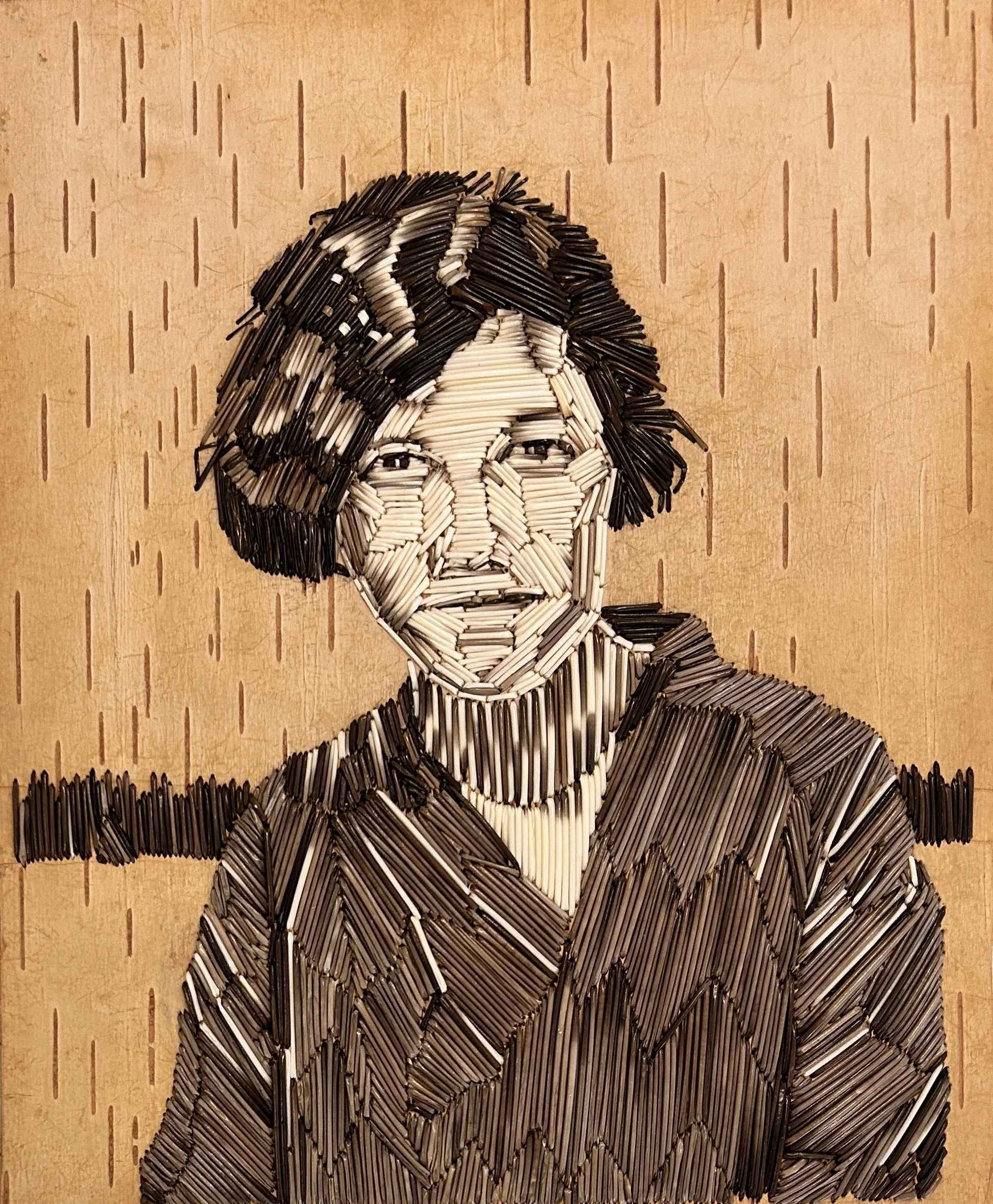
Tara Francis is a Mi’kmaq artist from Elsipogtog First Nation, specializing in Porcupine quillwork as well as silk painting and acrylic painting. She considers herself a contemporary artist, influenced by traditional techniques and teachings, bringing them forward in new forms and forums addressing the Indigenous voice in a modern world. She considers her work part of her own personal spiritual journey, a blessing to the Wabanaki people, honouring the symbols and traditions of her ancestors, and passing them forward to the next generation.
She attended the New Brunswick College of Craft and Design (NBCCD), where she received her Certificate of Native Art Study and Fine Craft Diploma in Surface Design, going on to obtain an Aboriginal Creation grant from ArtsNB to build a body of work inspired by the Mi’kmaq Petroglyphs of Kejimkujik NS. Her work has been featured on APTN’s Wabanakik documentary series, as well as various arts columns and magazines.
Using the traditional materials of the Mi’kmaq, native to the territory, birch bark, porcupine quills and sweet grass, I have created these ideal shapes based on my experiences with each element while I was at Kouchibouguac Park. In the Earth Cube, for example, I depict the raccoon we thought was a bear in the middle of the night, the squirrel that kept me company while I made my morning coffee, the view from the forest floor while I quilled from my screen tent. The apple and bunchberry blossoms and unfurling fiddleheads into beautiful ferns. Our teachings say that the spirit world is reversed from the physical plane, so the dodecahedron is a rendering of a reversed night sky with the Big and Little Dippers encircling it. The Octahedron shows the daytime sky and clouds and one mosquito, which made every moment of our residency a challenge. The Icosahedron depicts the view from Calendar’s Beach and the Tetrahedron, our nightly bonfire, where we would all gather and roast marshmallows, or make bannock on a stick, while we shared our stories with each other.

Sylvie Pilotte s'inspire de l'observation des mœurs propres à son environnement pour tenter d’en comprendre les valeurs sociales, ces valeurs qui semblent immuables, voire incontournables, et qui influencent nos comportements collectifs. Aussi, suivant l'idée selon laquelle un système capitaliste et patriarcal puisse tirer les ficelles d'une société axée sur l'image, elle cherche à déconstruire cette image en privilégiant une esthétique anarchique obtenue à l'aide d’agencements incongrus de fragments visuels en rupture avec leur contexte original. Dans un processus de création basé sur l'improvisation, les fragments sont sélectionnés pour leur suggestivité.
Sa technique compte notamment le collage, le dessin, le crayon marqueur et l'intégration d'objets. Par l'entremise du photomontage, la photo noir et blanc est jumelée à celle en couleur de manière à imbriquer le passé dans le présent et nourrir une réflexion sur la technologie, l'écologie, le féminisme. Aussi, s'intéresse-t-elle aux individus marginalisés, et plus particulièrement à la femme.
Sylvie Pilotte is inspired by the observation of the mores specific to her environment in an attempt to understand its social values, these values which seem immutable, even unavoidable, and which influence our collective behaviour. Also, following the idea that a capitalist and patriarchal system can pull the strings of an image-oriented society, she seeks to deconstruct this image by favouring an anarchic aesthetic obtained with the help of incongruous arrangements of visual fragments breaking with their original context. In a creative process based on improvisation, the fragments are selected for their suggestiveness.
Her technique includes collage, drawing, pencil markers and the integration of objects. Through photomontage, the black and white photo is paired with the coloured one so as to interweave the past in the present and nurture a reflection on technology, ecology, feminism. Also, she is interested in marginalized individuals, and more particularly in women.
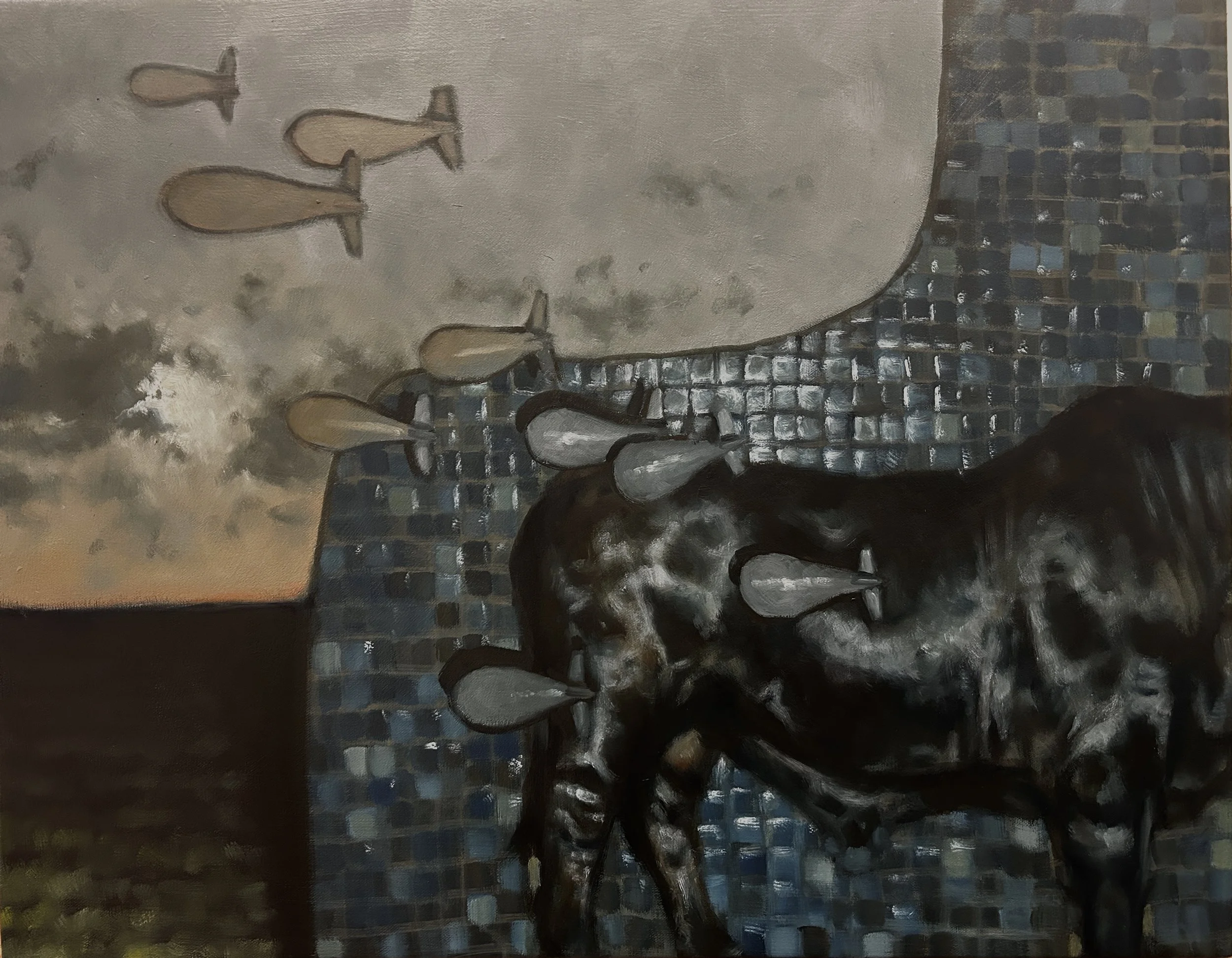

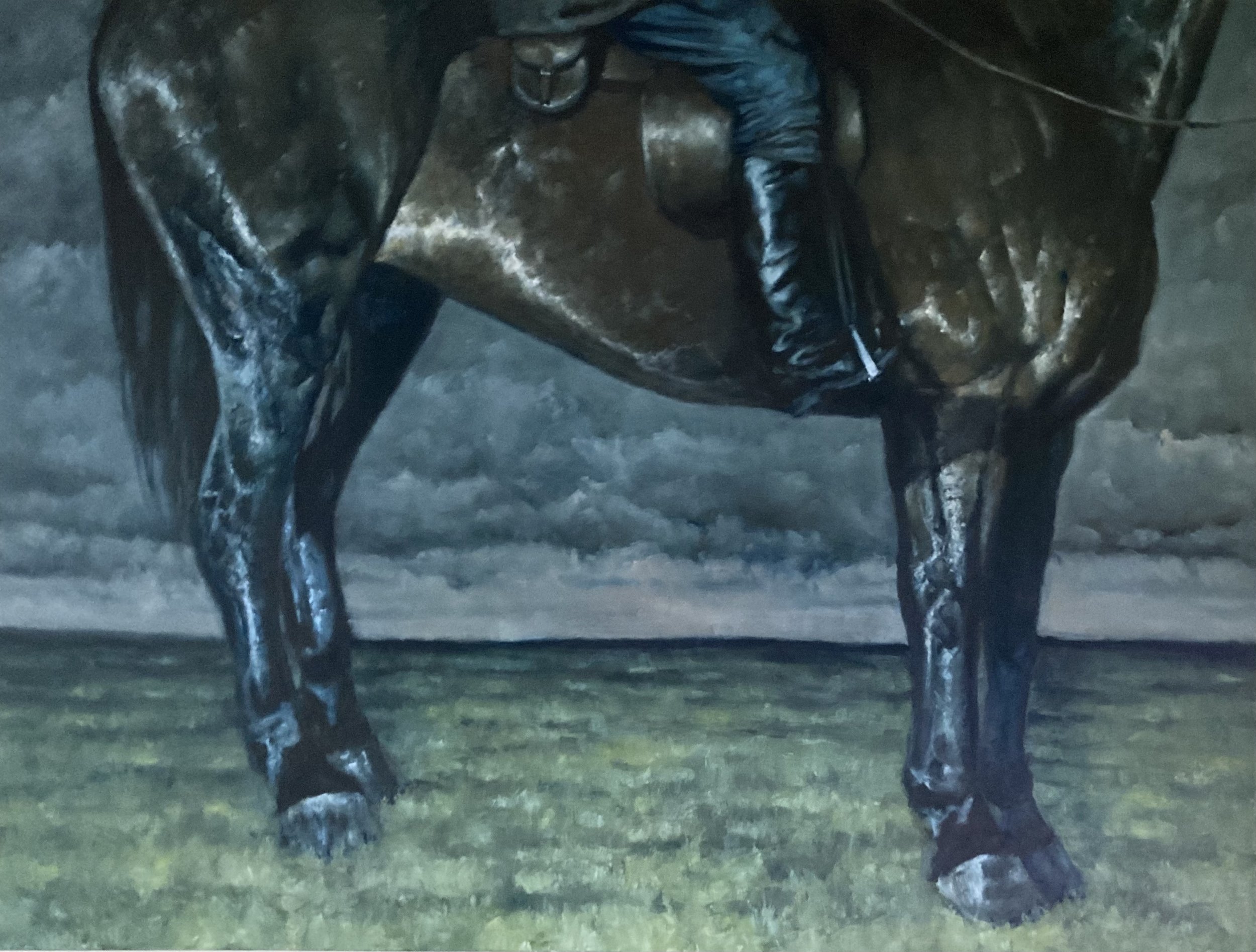
Jared Peters is a contemporary artist concerned with narratives of painting, history, and power. He holds a BA from UNB (2005), a BFA from NSCAD University (2010), and an MFA from the University of Western Ontario (2014). A recipient of numerous grants and awards, Peters was shortlisted for the prestigious RBC Canadian Painting Competition in 2011.
His work can be found in private and public collections across Canada. In addition to his painting practice, Peters has worked extensively as an art educator and organizer. He currently lives in Fredericton, New Brunswick, where he works as the Director of the New Brunswick College of Craft and Design.
“My painting practice is concerned with the narratives of history and power that are entangled into contemporary life. My paintings are often sourced from everyday encounters and environments, but relaying these occurrences through painting connects these encounters and spaces with the weight of history that continues to determine and direct contemporary society. I am concerned with how historical discourses of power and meaning inform our contemporary reality, and that influence and direct our behaviors, identities, and ideas within it. I want to open up possibilities and new potentials for encountering everyday spaces, and to destabilize and disorient the normative assumptions and narratives embedded within these spaces. The paintings strive to question the terms of how we can encounter the world around us.”


Carol Collicutt has been a practicing professional artist in New Brunswick for over 30 years. She holds two Bachelors degrees, in English Literature, and in Education, and a diploma from the Nova Scotia College of Art and Design.
Carol has exhibited at such venues as Gallery Connexion, the City of Saint John Galleries in Saint John, the CBC Georges Goguen Gallery in Moncton, ArtsPlace in Annapolis Royal, NS, Confederation Centre, Charlottetown, eyelevelgallery and the Mary E Black Gallery in Halifax, and most recently at Galerie Coline at the University of Moncton at Edmundston. Her work has also been part of many group exhibitions in the Atlantic Provinces, and the United States.
Her large photographs of eyes were shown at the Beaverbrook Art Gallery in the Marion McCain Atlantic Art Exhibition 2007, curated by Tom Lovett of Winnipeg.
She has been the recipient of 6 Creation grants from ARTSNB, the latest being awarded in December of 2015. She was president of Gallery Connexion, a federally funded, artist-run centre, for 6 years and served on the board for almost 20 years in various capacities. She is currently the Chair of ARTSNB. She also serves on many juries and committees which advance the profile of the arts in New Brunswick.
In 2026 she was recipient of the New Brunswick Laureate for the Visual Arts Award.
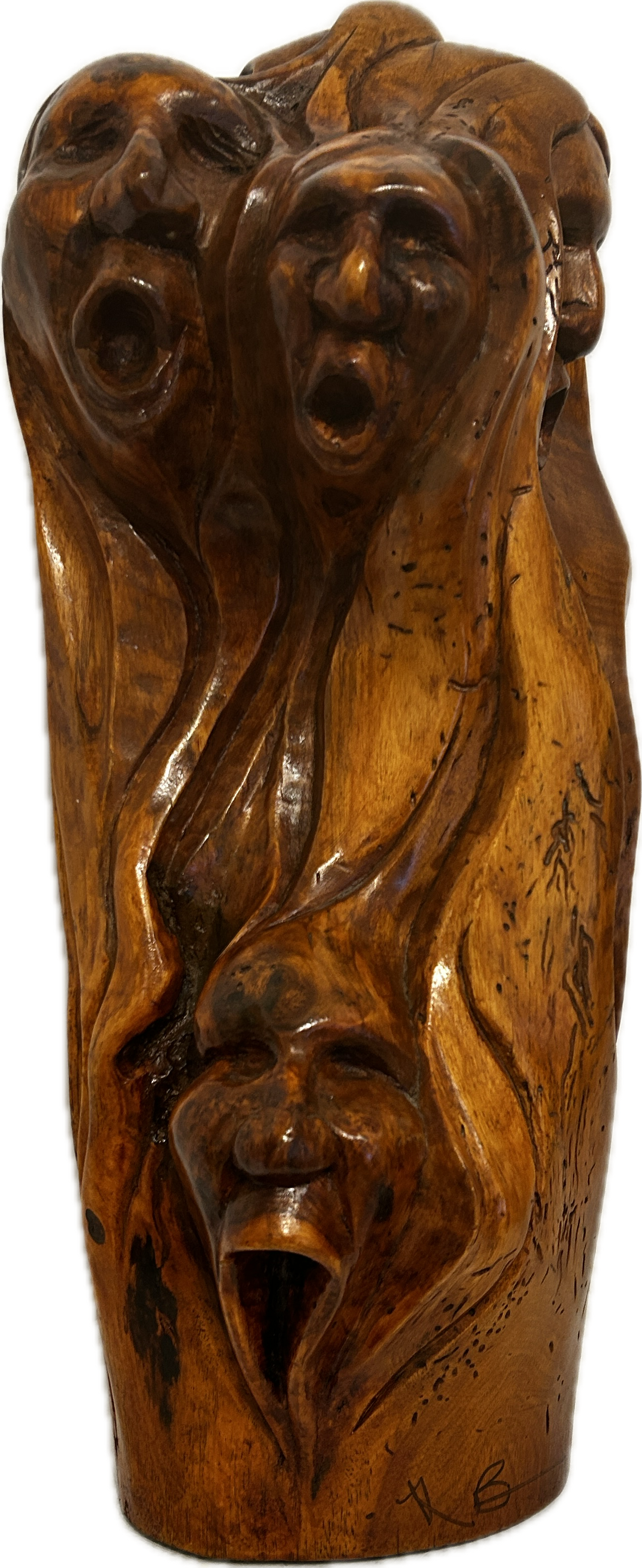
Ned Bear (1954-2019) was a sculptor from the Wolistoqiyik First Nations Community in Fredericton, New Brunswick. Bear, inspired by a Native Elder carver as a young boy, received formal training at the New Brunswick College of Craft and Design, where he became the first aboriginal student to graduate. Bear received additional training at the Saskatchewan Indian Federated College (now the First Nations University of Canada), the Nova Scotia College of Art and Design, and the University of New Brunswick, where he obtained a Bachelor of Education.
Bear created sculpted masks and marble or limestone figure forms. His masks are approximately three feet high and are usually carved from butternut or yellow birch. Each mask is adorned with horse hair (symbolizing the free spirit), bear fur (symbolizing healing), and/or metal (symbolizing something which is of the earth). Each mask or “spirit helper” tells a story and offers a modern interpretation of traditional spiritual beliefs. When creating art, Bear considered himself to be simply a vehicle through which energy flows from the eternal Great Spirit to the medium he is using. He said: “I prepare no preliminary designs or sketches for any of my work...allowing the spirit to guide me, and the medium to speak on its own behalf.”
Ned Bear made significant contributions as an instructor of Native art and culture, a curator, a guest speaker, and a juror. He served as the Director of Education for Saint Mary’s First Nation and as a member of the New Brunswick Arts Board. In 2006, he won first prize at the prestigious Face the Nation competition at the UC Davis Design Museum.

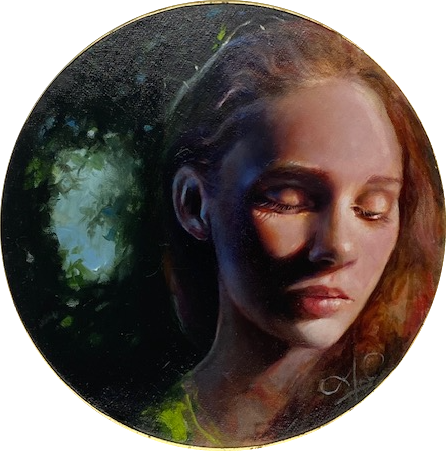


Marie Fox is a figurative oil painter whose work combines traditional western techniques and iconography with ancestral mythologies and mysticism to create a contemporary narrative. Based in Fredericton, New Brunswick, she has exhibited with several galleries in Atlantic Canada. In 2016, Fox was awarded the Studio Watch Emerging Artists Series and presented her exhibition, ‘Ascend’, at the Beaverbrook Art Gallery.
Her recent project, ‘Celestial Bodies’, was awarded a Creation Grant by artsnb and will debut as a solo exhibition in 2020 at Gallery on Queen. 'Celestial Bodies' will feature iconic Maritime landscapes and celestial skyscapes populated with figures that embody the earthly, the celestial, and the otherworldly.
Her work ‘Monument’ was featured in the 2020 Exhibition Materiality and Perception in Contemporary Atlantic Art: The 2019 Marion McCain Exhibition at the Beaverbrook Art Gallery.
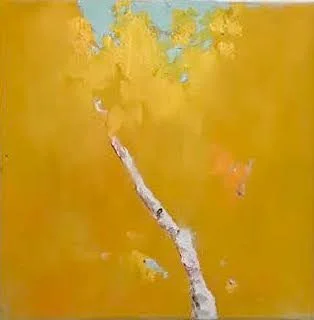
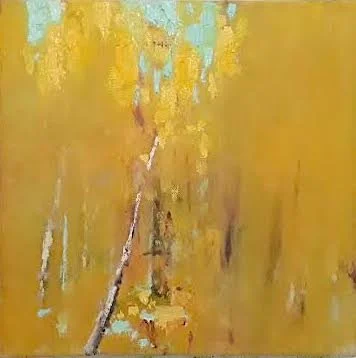
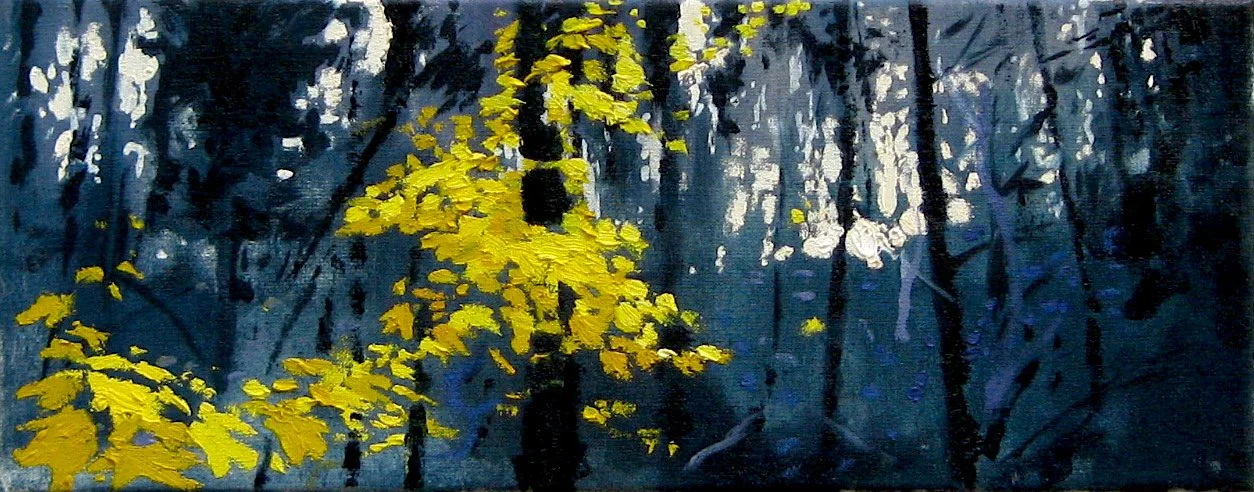
Jonathan Johnson received his BFA in Fine Art from NSCAD University in 2003. Johnson’s emerging exhibition was held at the Beaverbrook Art Gallery in Fredericton, NB. He was the first of five artists to be featured in a series entitled “Studio Watch – Emerging Artist Series”. In 2006, Johnson was short listed for the Royal Bank of Canada painting competition. In 2007, He received Artist in Residence at La Fenderie in Normandy, France. Honourable mention was awarded to Johnson in 2009 for the Mayor’s award of distinction in contemporary visual art. Johnson’s work is held in numerous corporate, private and public collections including the Art Gallery of Nova Scotia (NS), the Beaverbrook Art Gallery(NB), the New Brunswick Museum (NB), La Fenderie (Normandy, France),Dept.of Foreign and International Trade, Canada (Ont.) and the Halifax Regional Municipality (NS).
The works of Nova Scotia based Johnson has been exhibited and collected widely in Canada and abroad including the including, the Beaverbrook Art Gallery Fredericton, NB, the Kitchener-Waterloo Art Gallery, Musée d’art contemporain de Montréal, Art Gallery of Calgary, the Contemporary Art Gallery in Vancouver and the Museum of Contemporary Art(MOCCA), Toronto.
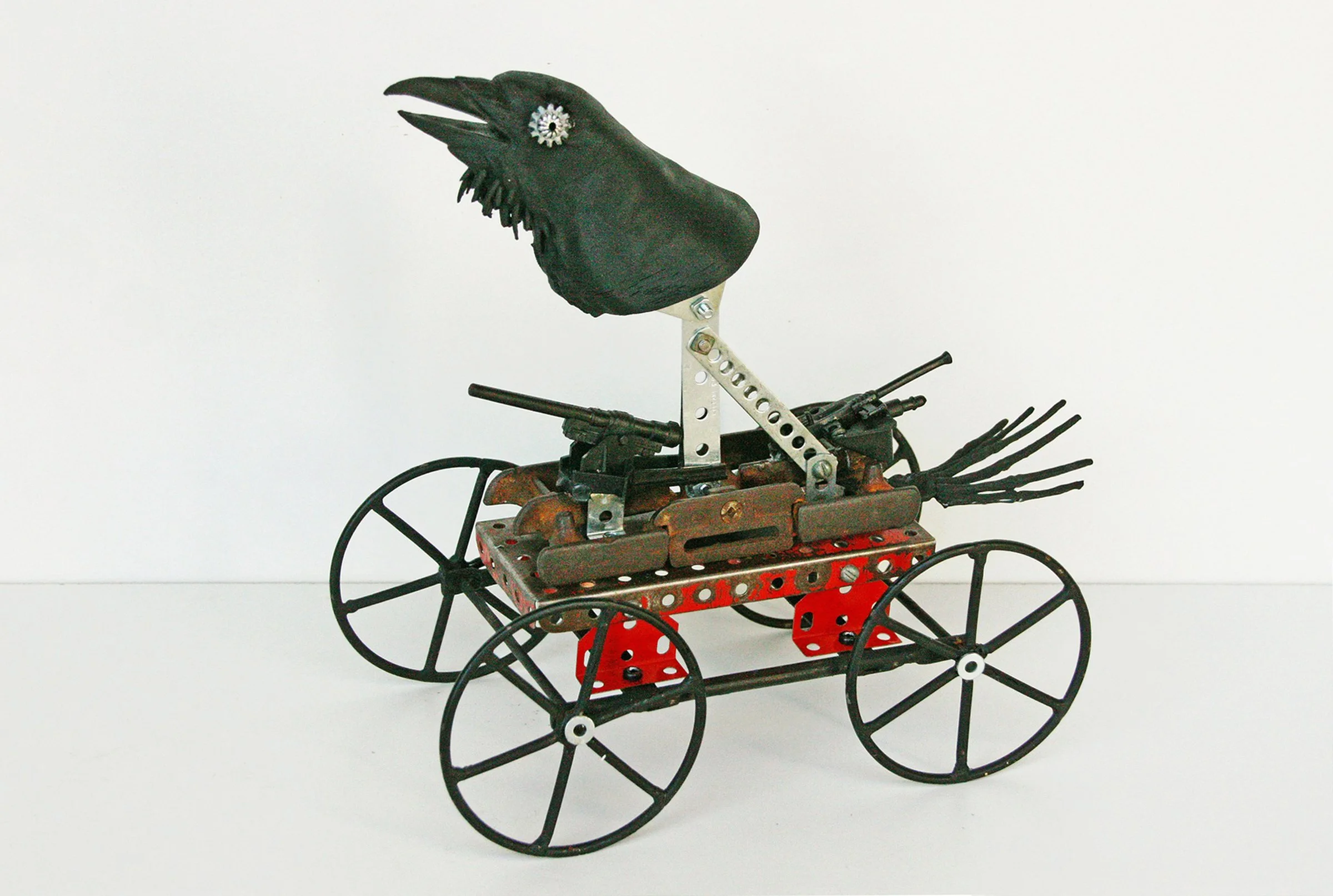
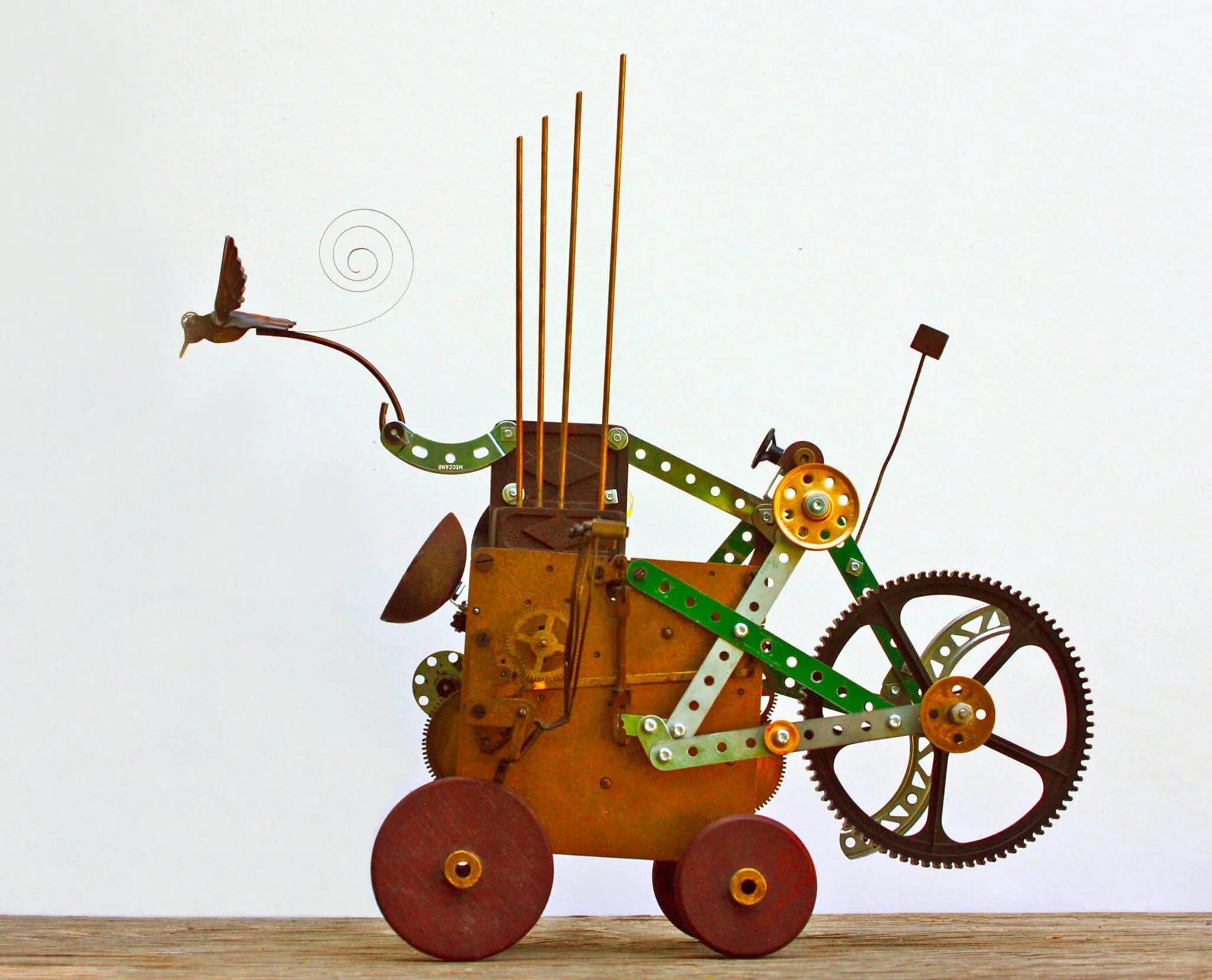
Since the early 1970s, Terry Graff has maintained a disciplined studio practice as a visual artist, and has exhibited his art regionally, nationally, and internationally. He is the recipient of major sculpture commissions, acquisitions, grants, and awards, and has conducted numerous talks, lectures and workshops across the country.
Born in Cambridge (Galt), Ontario, Graff studied Fine Art at the Doon School of Fine Arts, Doon, Ontario, and Fanshawe College of Applied Arts and Technology, London, Ontario. He received a B.A. in Fine Art from the University of Guelph, Guelph, Ontario, and a B.Ed in Visual Arts from the University of Western Ontario, London, Ontario. He also studied art history, philosophy of art, media arts, and art education at Wayne State University, Detroit, Michigan, received a postgraduate diploma in Fine Art (M.F.A. equivalent) from the Jan Van Eyck Academie, Maastricht, the Netherlands, and holds a M.A. in Art Education from the Nova Scotia College of Art and Design, Halifax, Nova Scotia (Thesis: Art and Ecological Vision).
In addition to his studio practice, Graff also maintained a distinguished career as a curator, art educator, art writer, and gallery director. He has served as Director of the Beaverbrook Art Gallery (NB), the Mendel Art Gallery (SK), Rodman Hall Arts Centre (ON), Confederation Centre Art Gallery (PEI), and the artist-run Struts Gallery (NB). He has curated over 200 exhibitions and has authored numerous articles, catalogues, and books on both contemporary and historical art. In addition, he was a high school art teacher, an education curator for the Art Gallery of Windsor, an instructor of drawing and sculpture at Mount Allison University, an instructor in the Arts and Culture Management Program at the University of New Brunswick, the founder and co-editor of the magazine BILLIE: Undercurrents in Atlantic Canadian Visual Culture, and currently chief editor of A-Vista, an AICA Canada publication.
Graff has received several awards in recognition of his various cultural contributions across Canada, including the Fanshawe College Distinguished Alumni Award; The Commemorative Medal for the Centennial of Saskatchewan (Official Honour of the Crown recognizing individuals who have made a significant contribution to the Province of Saskatchewan); the Christina Sabat Award for Art Criticism in Atlantic Canada sponsored by the Sheila Hugh MacKay Foundation; Recognition of Outstanding Contributions to the Advancement of Museums in Canada and to the Activities of the Canadian Museums Association; and two eagle feathers from the Mi’kmaq First Nation for his work in promoting the art of aboriginal artists.

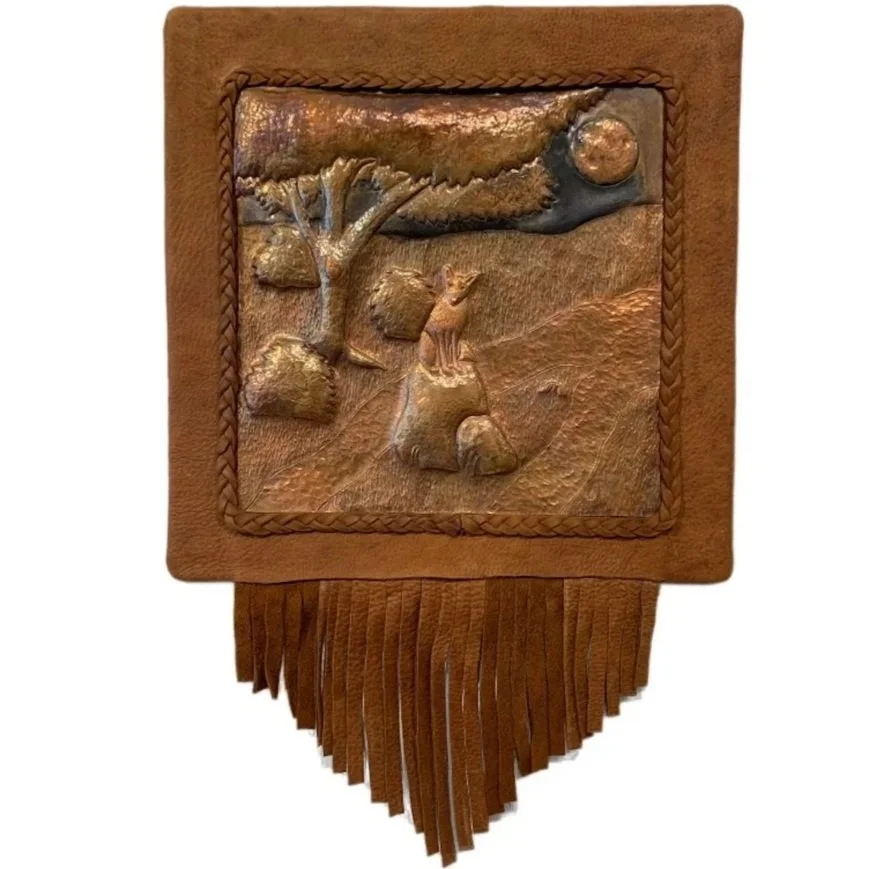

Chan Polchies is a Two-Spirit Indigenous artist from Woodstock First Nation. They started their career at the New Brunswick College of Craft and Design studying both Aboriginal Arts and Jewelry/Metal Arts. Their work combines leather, traditional loom beading, and chased/repoussé metal. They hand form metal with a technique called Chasing and Repoussé. Chasing is a technique in which metal is hammered from the front to sink the metal, and Repousse is a similar technique but instead the metal is hammered from the reverse side to create a low relief design.
Creating art connects them with their culture and lets them tell stories in a tactile form. They love telling stories because they feel storytelling is important in educating people on culture and history, or in having something that conveys feelings.
Chan’s work was displayed in the Sterling Jewelry/Metal Arts Student Annual Exhibition in 2016-2017, the Momentum Advanced Studio Practice exhibition in 2018, the Wabanaki Exhibition in 2020-2021 and the Kmawqupiyapon (we are sitting in the same circle) Exhibition, 2022. They were the recipient of the 2017 Brilliant Award from the NBCCD Student Metalsmith Competition. They also attended the Kingsbrae International Residency for the Arts.